Every Shaw floor is engineered to last. The right care routine ensures it does — and prevents the common mistakes that void warranties or accelerate wear prematurely.
Care requirements vary significantly across materials. Select your floor type for tailored guidance.
Shaw's StainResist technology buys you time — but not unlimited time. The correct response within the first few minutes of a spill determines whether it becomes a stain or a memory.
Dry soil particles act as abrasives inside carpet pile. Regular vacuum extraction prevents these from cutting fiber over time. Use a vacuum with rotating brush for cut-pile carpets; turn brush off for Berber to avoid snagging loops.
A 6-foot entry mat captures the majority of tracked-in soil and moisture before it reaches carpet. Replace or clean mats every 1–2 weeks. Mats with rubber backing should not be left on carpet long-term — they can trap moisture and discolor pile.
Consistent weight and foot traffic patterns create uneven wear. Rotating furniture positions redistributes wear paths and extends the floor's appearance life.
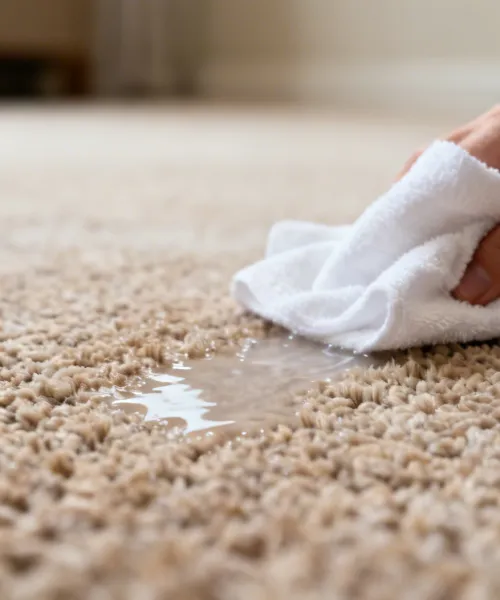
Use a clean white cloth and blot from the outside edge inward. Rubbing spreads the spill, pushes it deeper into pile, and can permanently distort fiber texture.
Dilute 1/4 tsp clear dish soap in 1 cup warm water for general spills. Apply sparingly, blot, then rinse with cold water. Avoid hot water — it can set protein-based stains (blood, dairy, egg).
Bleach, vinegar, baking soda paste, and "steam cleaning" services that apply excessive moisture. Over-wetting carpet can cause backing delamination and mold growth in the subfloor. Shaw's warranty requires carpet to dry within 24 hours of any wet cleaning.
| Stain Type | Recommended Treatment | What to Avoid |
|---|---|---|
| Coffee / Tea | Cold water blot, then dish soap solution | Hot water sets tannin stains |
| Red Wine | Club soda blot, then Shaw R2X spray | Rubbing, delay beyond 5 minutes |
| Pet Urine | Enzyme-based cleaner (e.g., Nature's Miracle) | Steam — heat bonds protein odor permanently |
| Grease / Oil | Dry solvent or dish soap, cold water rinse | Hot water; spreads the oil |
| Ink (ballpoint) | Rubbing alcohol, blot immediately | Water-based cleaners alone |
| Mud | Allow to fully dry, then vacuum; treat residue | Treating while wet — spreads stain |
Pro tip: Shaw recommends professional hot water extraction cleaning every 12–18 months for residential carpets — not steam cleaning, which is a marketing term for the same process when done correctly, but often overdone by budget operators. Always confirm the technician's equipment dries your carpet within 24 hours.
Shaw's Floorté LVP is 100% waterproof — but "waterproof" doesn't mean "care-free." Standing water that seeps into seams or expansion gaps can still cause issues at the subfloor level. Correct cleaning chemistry also matters: the wrong cleaner strips the factory finish faster than any foot traffic will.
Fine grit and sand are the primary enemy of vinyl wear layer. Sweep before mopping to avoid scratching with abrasive particles.
Shaw Floorté cleaner or an approved alternative. Wring the mop to nearly dry — minimal moisture, no standing water pools.
LVP won't absorb liquid, but dried residue from sugary drinks can leave a film that attracts more soil. Wipe and dry immediately.
Steam mops (heat softens and voids warranty), wax-based polishes (leaves hazy buildup), bleach solutions, or abrasive scrubbing pads. Ammonia-based cleaners etch the wear layer microscopically over time.
Hard chair legs, appliance feet, and furniture bases concentrate weight on a small surface area. Felt pads distribute load and prevent indentation or gouging of the wear layer.
While LVP is dimensionally more stable than wood, extreme temperature swings (below 50°F or above 95°F) can affect plank expansion near walls. Keep AC and heat consistent.
Some rubber compounds bleed plasticizers that permanently discolor vinyl flooring. Use only vinyl-safe mats — confirm "non-staining" on the label.
Hardwood is the most maintenance-sensitive flooring category Shaw offers — and the most rewarding when maintained well. Unlike LVP, solid hardwood can be sanded and refinished multiple times, meaning a properly cared-for Shaw hardwood floor can outlast the house itself.
Never use a damp mop as a daily tool. Water and wood are longtime enemies. Even hardwood with polyurethane finishes absorb moisture through micro-gaps at joints over time.
Hardwood's polyurethane finish repels surface moisture — but only briefly. Any liquid on hardwood should be treated as an immediate priority.
Maintain 35–55% relative humidity. Dry winters (under 35%) cause gaps between planks. Humid summers (above 65%) cause cupping. A whole-home humidifier and dehumidifier combination is the most reliable protection for hardwood investment.
Refinishing window: Solid Shaw hardwood (¾" thick) typically allows 4–6 refinishes over its lifetime. Engineered hardwood allows 1–2 depending on wear layer thickness. Ask for the wear layer spec when ordering so you know your refinish options before installation.
Shaw ceramic and porcelain tile itself is nearly indestructible. The real maintenance challenge is the grout — a porous cementitious material that absorbs oils, minerals, and bacteria if left unprotected. Tile care is 90% grout care.
Factory grout has no inherent stain resistance. A penetrating silicone sealer applied before the first use creates a moisture and oil barrier inside the grout matrix.
Avoid vinegar, lemon-based cleaners, or any acid-pH product — even "natural" ones. Acid dissolves the calcium carbonate in cement grout, eroding it over time and causing it to crack and crumble.
A diluted oxygen bleach solution or commercial alkaline tile cleaner, scrubbed with a stiff brush (not steel wire), removes embedded soil before it becomes permanent discoloration.
Our flooring care specialists can walk you through the correct routine for your product, your household, and your subfloor conditions.
Ask a Floor Care Specialist